Sixty years ago, the first duet between a musician and a computer
Foreword: there is still much research to be done on this historical event and, more generally, on the history of computing. Every year, new documents are discovered that provide us with more information about what happened and, at times, change the overall picture. The event recounted in this article is, at present, one of the earliest attempts to make a computer play music and the first known attempt to perform and record a computer/human duet.
On May 18, 1966, at the Computer Center of Reed College in Portland, Oregon, two students and a professor were, without knowing it, writing one of the most interesting pages in the history of computer music. Although it is curious that the event remained for so many years almost unknown, practically forgotten by everyone, this should not come as a surprise: many experiments from that era, even those which, like this one, were meticulously recorded and documented, have only recently been rediscovered and give us an idea of the lively research being conducted at the time, sometimes carried out by teams of computer experts using advanced equipment in state-of-the-art laboratories, other times conceived and developed with more modest means and brilliant intuitions.
Besides a few spectators and a photographer who would take several pictures and immortalize the scene, there were three people in the Computer Center that day who were about to enter computer history.
The first was John Edward Herbert Hancock. Born in England, in Rugby, on October 20, 1929, Hancock had studied at Imperial College London, where he graduated with honors. After earning a doctorate and other academic qualifications, he moved to the United States in 1959, to Reed College, where, in addition to teaching, he embarked on an extraordinary multidisciplinary research journey that would lead him to combine, in an unimaginable way, his field of study, chemistry, with his passions—music and computers—in the search for new teaching methods.

Second Renaissance Fair, May 1969. John Hancock, in the center, is photographed while playing music for the students dancing around the Maypole (courtesy of Reed College).
Marshall Cronyn ’40, vice president and professor of chemistry, wrote about him in 1989 in his funeral eulogy: “Very early in his career, John began to focus his research efforts on the synthesis of a molecule having the shape of one of the five regular polyhedra. The molecule is dodechedrane, a symmetrical C20H20 hydrocarbon with 12 faces, 20 vertices, and each side pentagonal. In degree of difficulty, this project was rather like an assault on the Mt. Everest of organic synthesis being carried out with a small band of undergraduates and no retinue of porters. A few years ago, when the synthesis was finally accomplished by a group in a large midwestern university, it had required over 150 full-time graduate student and postdoctoral research years. John's interest in dodecahedrane led him in 1960 to construct the first computer used at Reed College. He wanted to calculate the number of isomers, which would be possible with the replacement of hydrogen on dodecahedrane by other elements, such as chlorine. john constructed the computer from pinball machine parts supplied by the Portland Police Department from illegal machines that they had confiscated. Since the machine performed only one function, john called it DIMWIT, for "Dodecahedrane Isomer Machine With Internal Translation.”

DIMWIT, the computer built by Hancock’s team using pinball machine parts.
At Reed College, Hancock’s path crossed with that of a young and brilliant student named Peter Langston. The two shared an interest in computers and music, but while Hancock was more interested in historical research, which had led him to study and rediscover ancient musical instruments and to personally take part in the Renaissance Fair (later called Renn Fayre starting in 1969), playing period wind instruments, Langston was more interested in string instruments such as guitar, banjo, mandolin, and bass, as well as jazz, rock, and folk music, a passion that would lead him to play in numerous bands such as Puddle City and later Entropy Service.
Born in 1946, Langston soon discovered that he had a natural talent for programming and an unstoppable creativity when it came to devising something new with computers. “Curiosity and play,” as he himself described the driving force that pushed him to imagine new uses for the computers available at the college, led him in 1965 to begin programming his first computer game. The creative process lasted a couple of years and, in 1967, he announced to The Sunday Oregonian that he had completed a turn-based combat game for two players, most likely the first of its kind in history. With a touch of self-irony, he called it Folly, because it seemed to him “terrible folly to be spending my time playing games with a computer when I had studying to do for exams.”
In Folly, two players took turns at the teletype machine to issue orders to their fleet (a bomber and a fighter, respectively tasked with attacking the enemy base and defending their own from the opponent), taking into account onboard weapons, fuel, and other factors. The computer would then calculate the turn, return an update, and the game would continue until one of the two players was annihilated or, after a certain number of turns had elapsed, until the winner was decided based on points. Inevitably, the first outcome was the more common one.

Peter Langston at the console of the IBM 1130 on which FOLLY was run.
Once the game was over, Langston, often thanks to feedback received from his players—sometimes in the form of pedantic or angry complaints—would proceed to make changes to the combat system and introduce other variables into the game, making it more complex. One of the most interesting modifications was added after a player had tried to move his bomber outside the game area in order to escape the enemy fighter. In response to this unexpected maneuver, Langston programmed the machine to make the vehicles reappear on the other side of the map and, under the pretext of a hyperspace jump, implemented a mechanic similar to those seen in Spacewar! and Pac-Man.
To program Folly, Langston used an IBM 1130, a computer that had just been introduced by IBM as an entry-level model, at the economical cost, for the time, of one thousand dollars per month in rental fees or, depending on the configuration, 32 or 50 thousand dollars to purchase, respectively equivalent to about 10,000 and 338,000 or 529,000 dollars in 2026. In the Computer Center of Reed College, however, there was another computer, the IBM 1620, a model that the company from Armonk had replaced precisely with the 1130. Compared to its successor, the IBM 1620 had several disadvantages, including the lack of the circuits necessary to perform arithmetic operations, which were instead carried out through lookup tables (a circumstance that had led its designers to nickname it CADET, an acronym for “Can’t add, Don’t even try”). On the other hand, the IBM 1620 had one peculiarity that made it unique and, in some respects, irreplaceable for Langston and Hancock: it could play music.
The circumstances of the discovery are unclear, but by 1965, both in IBM laboratories and at several universities across the United States, numerous researchers, programmers, and students had realized—or learned through word of mouth—that by placing a radio receiver on top of the IBM 1620 console and tuning it to 540 KHz, it was possible to pick up the radio signal emitted by the computer’s circuits. It did not take long to understand how sounds of different frequencies could be emitted and thus simple melodies created, performed in real time by the computer and played through the radio’s speakers. IBM technicians had also written several programs, stored on punched cards and programmed in Fortran. They had collected them in a Music Box, and over time had added several tunes, giving users the possibility of selecting pieces such as the United States national anthem, Dixie, Londonderry Air, the folk song Two Brothers, Annie Laurie by Alicia Ann Spottiswoode, and even some short excerpts from Mozart.
At Reed College, Hancock and Langston were unaware of the experiments conducted elsewhere and independently set to work: the professor at the piano and the student at the computer. The first note they reproduced was an A, obtained by making the computer execute an operation at 440 cycles per second. The result was judged satisfactory, even “pleasant” by the professor, which encouraged the two to continue and find a way to produce other notes across four and a half octaves, from A2 to D♯7. Having done this, they began programming the computer to perform its first pieces of music. Because of the way the sound was produced, the computer could only play one note at a time, and this narrowed the choice of possible candidates. In the end, Hancock and Langston opted for Bach’s Prelude No. 21 from Volume I of The Well-Tempered Clavier, precisely because of the limited number of notes played simultaneously.
Besides the impossibility of playing more than one note at a time, Hancock and Langston also had to contend with other technological limitations: the program they had to write was stored on punched cards and could not make the computer perform more than 3,000 notes. Yet it could perform them extremely quickly, from 1 to 999 notes per minute, but without the possibility of pauses because the very operation of the computer itself was what was being transformed into sound—of any kind—by the radio. This technical constraint, as will be seen, would prove to be of some importance.

Peter Langston showing a punched card. According to the newspaper article’s caption, it is the first card of the music program. To Langston’s left, part of the IBM 1620 control console can be seen.
Having completed this first musical piece, Hancock and Langston finally became aware of the experiments carried out by IBM and had also had the opportunity to personally hear the sounds produced by Big Blue’s researchers, who in the meantime had attempted a rendition of Anchors Aweigh. They were not impressed and, indeed, Hancock was rather critical of the result achieved by his colleagues (“Its duration of tone was out of tune, though, and the quality of the notes was bad, raucous”); thus they continued on their own path, simultaneously exploring two possibilities: the creation of a program that would allow the computer to write original music and the realization of a duet with a human musician.
The second project, simpler and within the capabilities of the machines available at the time, was completed on May 18, 1966, sixty years ago. The selected musician was a student, Joan Allen Smith, a talented violinist close to graduation.
The computer’s electromagnetic signal was picked up and reproduced by a transistor radio, a small portable Zenith Royal 275, positioned directly on top of the console. The violinist stood in front of the radio and tested her instrument, preparing for the duet. A magnetic tape recording was also arranged—currently preserved in the Reed College archives and later partially transferred to CD-ROM—while several photographs of the event were taken. At the end of the duet, Langston turned to the violinist, curious to know what the experience of playing with a computer had been like: “When asked how it was playing the duet with the computer, Joan's only comment was that the computer was ‘unrelenting’. . .”

Peter Langston seated at the IBM 1620 console and Joan Allen Smith as she prepares to play the violin in front of the portable Zenith Royal 275 radio tuned to the frequency emitted by the computer’s circuits.
At the end of the duet, Langston and Hancock still had many other ideas to explore. They spoke about them to a journalist from the Oregon Daily Journal, Miles Green, who wrote an article published on July 5, 1966, entitled “Two Reed Men Try Hand as Music Teachers for Computer.” They mentioned the technical difficulties, the work of their colleagues at IBM, and future projects such as the intention of transmitting the music produced by the computer via cable in order to add an instrument to the orchestra at the nearby Eliot Hall, or the possibility of creating actual computer concerts by separately recording different tracks onto tape and combining them, or synchronizing multiple computers so they could play simultaneously in real time. As far as is known, none of these possibilities was later explored and some of them, such as the idea of creating a computer concert, would quickly lose their meaning, overtaken by technological progress that would allow a single computer to play multiple instruments.
After the duet, the paths of the three participants diverged. Joan Allen Smith won a scholarship and went to study at Bryn Mawr College and, despite dedicating herself to psychology, continued to cultivate her interest in music without interruption. Combining her passion with her field of study, she wrote the book Schoenberg and His Circle: A Viennese Portrait, published in 1986.

Joan Allen Smith portrayed in the 1965 Reed College yearbook.
John Edward Herbert Hancock remained at Reed, running the Computer Center for several years and continuing his research both in the field of chemistry and in that of computers and Computer Assisted Instruction. One of his most innovative projects was the creation of a chemical laboratory simulation program for conducting virtual experiments through a terminal. He died suddenly on March 16, 1989, at only 59 years of age, leaving behind an invaluable legacy of research, innovation, inventiveness, and passion, passed on to his many students and colleagues over the course of the three decades he spent at Reed.
Peter Langston continued writing computer programs and games, first for fun and then as a method for teaching computer science to his students and inspiring them to become passionate about programming. Following one of the computers he had helped build, he moved to Evergreen State College, where he continued creating games, including Empire (a multiplayer strategy game combining turn-based and real-time mechanics), Wander (software for creating text adventures, with a demo module already preloaded containing the beginning of a science fiction adventure), and Oracle (a social application that used the inventiveness of its users to collect questions, sort them, receive answers, and deliver them to the interested party, while pretending to be an artificial intelligence program).
In 1982, he began writing games professionally, when he was asked to create and direct Lucasfilm’s Games Group, which would later become known as LucasArts. It was precisely in his role as head of the Games Group and game designer that he was finally able to realize one of the ideas conceived together with Hancock: making the computer compose music.
He achieved this by inserting Riffology, a sophisticated procedural music generation algorithm, into David Levine’s game Ballblazer. The latter was a sports-themed science fiction action game in which two players seated at the same console had to control vehicles called rotofoils in order to compete for possession of a ball, attaching it to a magnetic field and trying to direct it into the opposing goal. In real time, Langston’s routine was capable of creating the musical accompaniment to the matches by adapting it to the flow of the game, skipping notes, inserting pauses, increasing the volume, and improvising in constantly different ways, a feature cleverly exploited by the advertising, which hinted to the player that, through their athletic feats on the playing field, they could compose music.

Ballblazer for the Atari 7200. Published years late because of Atari’s financial crisis, in 1985 it would become one of the first computer and console games to feature split-screen multiplayer. Peter Langston’s Riffology music algorithm represented an extraordinary step forward for music in video games.
Langston: “The improvisation uses snippets of music contributed by a number of friends. Pat Metheny and Lyle Mays contributed some material, and Doc Watson contributed something as well. Part of what makes it so compelling is that it includes small fragments of music from great musicians. That was also built into the game’s backstory: each year, whoever wins and becomes the ‘Master Blazer of the Year’ gets to contribute a fragment of advice in the form of a musical phrase. That phrase then becomes part of the Song of the Grid.”
Like many experiments from those years, it seems that little remains of the 1966 duet beyond one minute of recorded audio, a few photographs, and the fading memories of those who took part in it. And yet, in these times, with LLMs capable of creating music by following human prompts, the humanistic approach with which Hancock and Langston undertook their research is striking. Elsewhere, such as at the University of Illinois or in the Bell laboratories, similar experiments had already been launched or were underway, with the aim of making the computer create new compositions such as the Illiac Suite or sing Daisy Bell. At Reed College, perhaps for the first time, the computer was viewed differently: as another instrument to accompany a musician or to be included in an orchestra.
Sources:
- The Oregon Daily Journal, Tuesday, June 5, 1966, page 16, “Two Reed Men Try Hand as Music Teachers for Computer”
- The Oregonian, Tuesday, March 21, 1989, page 46, “Reed College Professor John Hancock Dies at 59”
- The Sunday Oregonian, Sunday, April 23, 1967, page 151, “How to Play FOLLY with a Computer”
- Instructions for Playing Punched Card Music on the IBM 1620, ComputerHistory.org
- Cronyn, Marshall. Faculty Resolution Honoring the Memory of John Edward Herbert Hancock.
Thanks to:
- Peter Langston, Reed College, Retrocampus.
Rebels, Pirates and Tentacles - The Story of LucasArts (Hardcover - PREORDER)
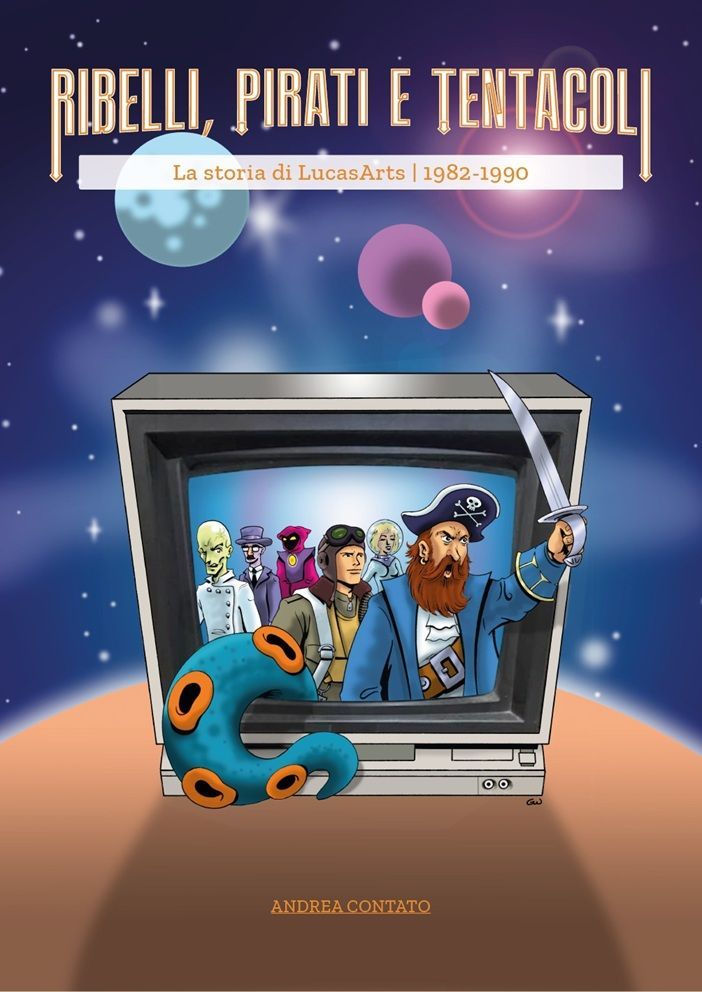
Ribelli, Pirati e Tentacoli - La storia di LucasArts (Hardcover - PREORDER)
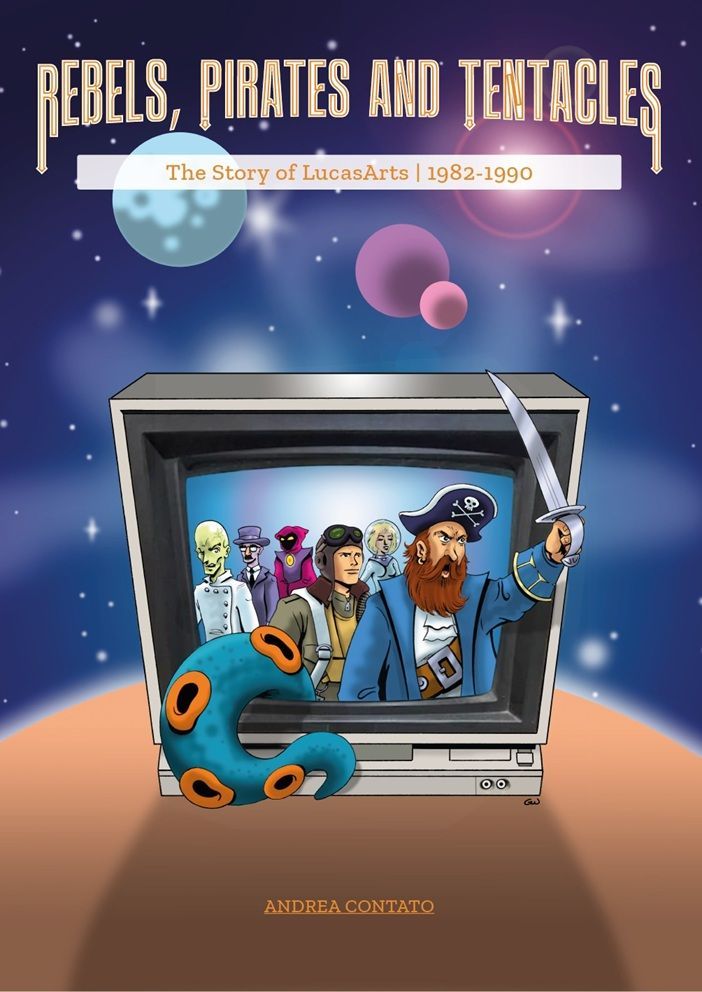
Rebels, Pirates and Tentacles - The Story of LucasArts (Softcover - PREORDER)